
Parts of a Window
Click any part. Cut it open. Take it apart in the order a restorer would.
A window has three groups of parts: the frame that stays fixed in the wall, the sashes that hold the glass and move, and the trim that finishes it inside and out. A wood double-hung window like this one adds a fourth, the balance: cords, pulleys and weights hidden in the wall.
Parts of a window diagram
Eighteen parts of a six-over-six double-hung wood window, labeled on the window itself. Every one of them is clickable in the 3D explorer above.
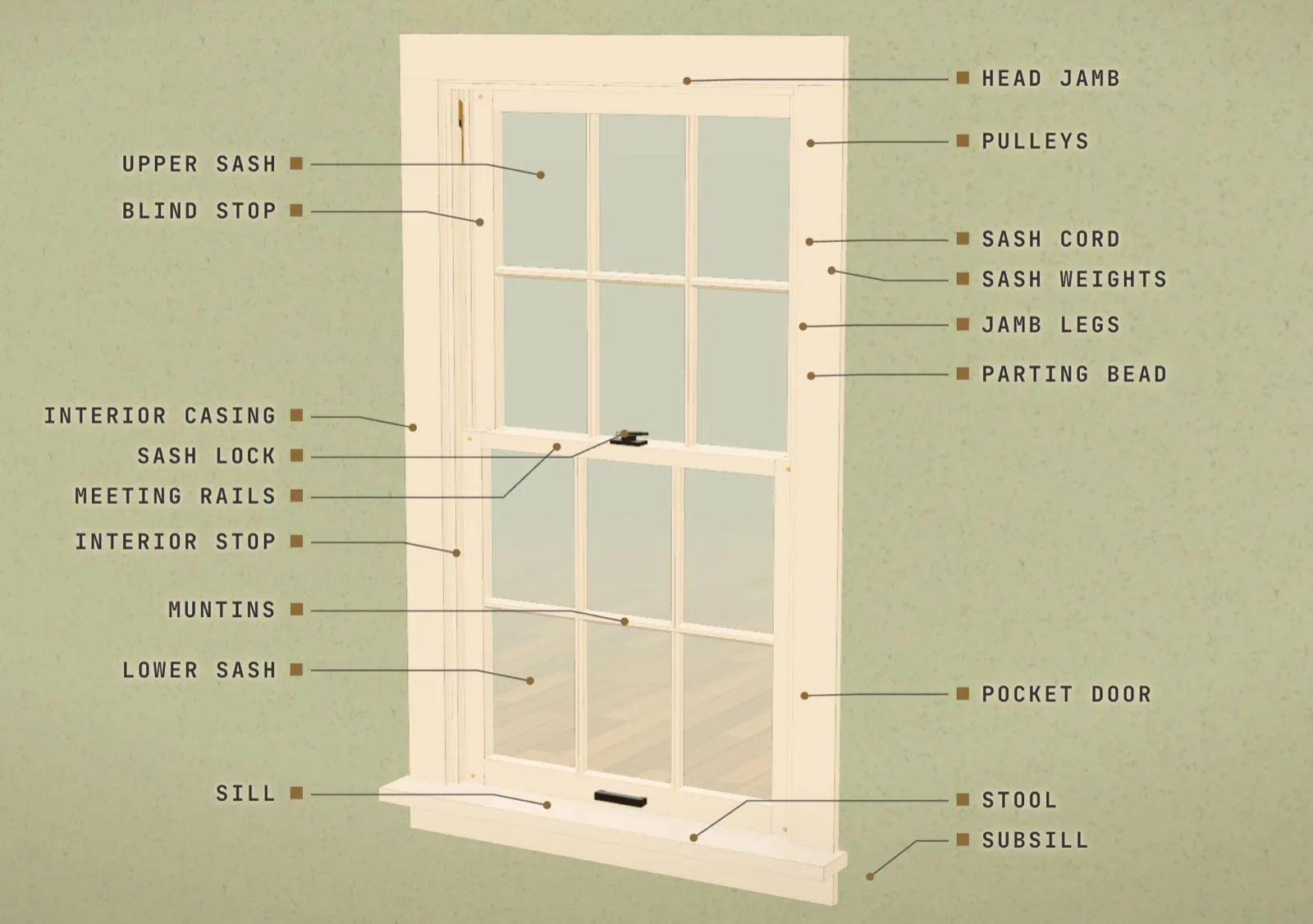

Parts of a window frame
The frame is the fixed box the sashes ride in. It stays in the wall when the sashes come out.
Rough openingThe framed hole in the wall, made of studs, a header and a rough sill, that the window is built into.
SillThe sloped bottom of the frame. The lower sash rests on it when the window is closed, and the slope sheds water away from the house.
SubsillSits under the sill on many old windows. Its horns run out past the frame to throw water away from the wall. Some windows use one thick sill instead.
Jamb legsThe sides of the frame. They hold the sashes in position and carry the pulleys.
Head jambCaps the top of the frame.
Blind stopThe outermost guide. It keeps the upper sash in line from the outside, and the exterior casing butts against it.
Parting beadA removable strip in the middle of the jamb that parts the upper sash from the lower one. Pry it out and the upper sash is free.
Interior stopThe removable molding on the room side that holds the lower sash in its track. In a restoration it is the first thing off and the last thing on.
Pocket doorA small access door cut into each jamb leg. Pop it out and you can reach the sash weights without taking the window apart.

Parts of a window sash
A sash is the frame that holds the glass. A double-hung window has two, and both slide.
Upper and lower sashThe upper sash rides between the blind stop and the parting bead. The lower sash rides between the parting bead and the interior stop.
StilesThe vertical pieces of a sash. On a weighted window the cord groove runs down their outside edge.
RailsThe horizontal pieces of a sash. The wider bottom rail takes the lift and the wear.
Meeting railsThe two rails that meet in the middle when the window is closed. They are beveled so the lock pulls them tight against each other.
Mortise and tenonThe joint that locks the stiles and rails together, pegged instead of glued.
MuntinsThe small bars that divide the glass into separate panes. The window in the explorer is six over six: six panes in each sash.
Glass and glazing puttyThe glass sits in a rabbet on the outside of the sash, and glazing putty seals each pane against the weather.
Sash lockPulls the two meeting rails tight against each other. That stops drafts, and it locks the window.
Sash liftThe handle on the bottom rail that gives you something to grab.

How sash weights balance a window
Old double-hung windows balance each sash with weights hidden in the wall, so the sash stays wherever you stop it.
Weight pocketThe hollow behind each jamb leg, between the jamb and the wall stud, where the weights hang.
PulleysTwo per side near the top of the jamb, one for each sash. A pulley made for rope has a curved wheel that cradles the cord.
Sash cordRuns from the side of the sash, over the pulley and down into the pocket. No springs and no plastic.
Sash weightsHang on the end of each cord. Each weight is about half the weight of the sash, so the pair balances it. Lift the sash and the weights drop. Let go and it stays right where you left it.
Window trim
Trim covers the gaps between the window and the wall, inside and out.
Exterior casingCovers the gap between the frame and the siding outside.
Interior casingThe decorative trim that blends the jamb into the wall inside the room.
StoolThe interior shelf the lower sash closes against. Most people call it the windowsill.
ApronThe last piece of trim, under the stool.
Common questions about window parts
What is the difference between a window sill and a window frame?
The frame is the whole fixed box: the sill at the bottom, the jamb legs on the sides and the head jamb on top. The sill is only the bottom piece, sloped to shed water outside. The flat shelf inside the room is the stool, though most people call that the sill too.
What is the grid part of a window called?
Muntins. They are the small bars that divide the glass into separate panes. On many modern windows the grid is a grille that sits on or between one large pane instead.
What is the wood trim around a window called?
Casing. Interior casing frames the window inside the room, and exterior casing covers the gap to the siding outside. Under the window on the inside are the stool and, below it, the apron.
What holds an old window open?
Sash weights. Each sash hangs on two cords that run over pulleys to weights hidden in the wall, and each weight is about half the weight of the sash. When a cord breaks, the sash stops staying up.
Replacement parts for wood windows
Almost every part of an old wood window can be repaired or replaced. These are the ones we stock.
-


Austin’s Glazier’s Putty
$47.99 – $84.99Price range: $47.99 through $84.99Select options This product has multiple variants. The options may be chosen on the product page -


Buffalo Sash Cord
$24.99Select options This product has multiple variants. The options may be chosen on the product page -
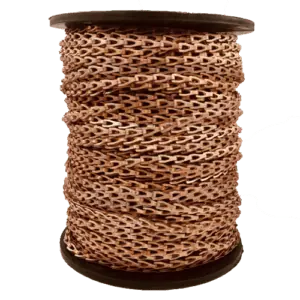

Copper Coated Sash Chain #8
$460.00Select options This product has multiple variants. The options may be chosen on the product page -
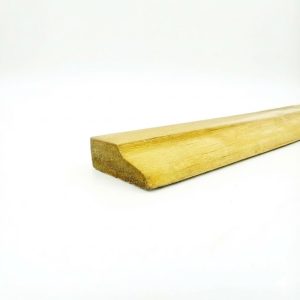
Ogee Window Stop
$99.99 – $429.99Price range: $99.99 through $429.99Select options This product has multiple variants. The options may be chosen on the product page -
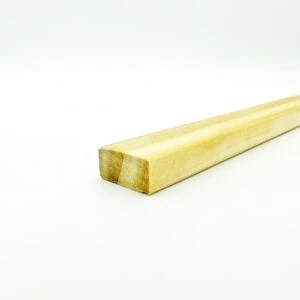
Parting Bead
$79.99 – $799.99Price range: $79.99 through $799.99Select options This product has multiple variants. The options may be chosen on the product page -
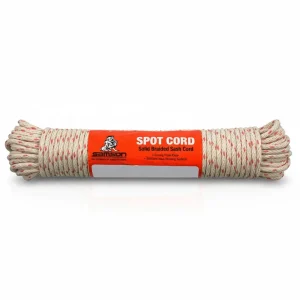
Samson Sash Cord
$29.99Select options This product has multiple variants. The options may be chosen on the product page
Fix it instead of replacing it
Every part on this page can be repaired or replaced. Shop the supplies, or send Scott a question about your own windows.
Want the long version? Read our guide to double-hung window anatomy on The Craftsman Blog.